
Best Flooring for Lake Homes Near Seneca, SC: Hardwood That Survives Our Humidity
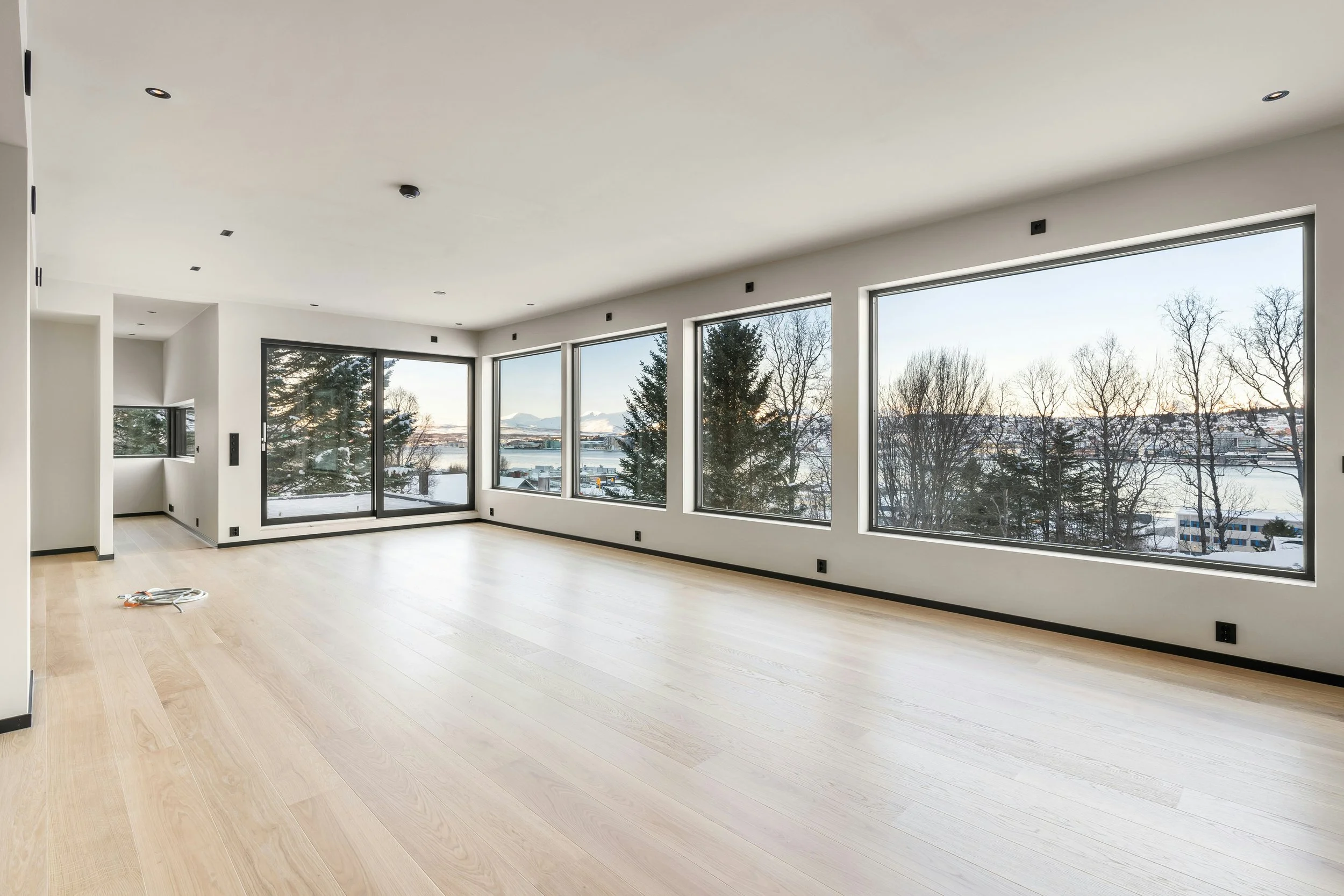
Serving lake homes around Lake Keowee, Lake Hartwell, and Lake Jocassee in Oconee County and the Upstate.
There's a particular kind of pride that comes with owning a home on the water here in the Upstate. The morning fog lifting off Lake Keowee. A dock you can walk to in bare feet. Friends and grandkids tracking in lake water all summer long and nobody minding one bit.
Then you start planning your floors, and the questions begin. Will hardwood hold up out here? Won't all this moisture warp it? Should I just give up and put down vinyl?
We've installed and restored floors in lake homes across Oconee County for more than seventeen years, and here's the honest answer: yes, you can absolutely have beautiful hardwood floors in a lake home near Seneca. You just have to make the right choices going in — the kind that account for how our specific climate behaves. This guide walks you through exactly that.
Why Lake Homes in the Upstate Are a Special Case
Most flooring advice you'll find online is written for somewhere else. Coastal Charleston worries about salt air and constant high humidity. The Midwest worries about hard winters. Neither one is quite our situation.
The Upstate sits in a humid-subtropical climate, and the real challenge for wood floors here isn't simply that it gets humid — it's the swing. Our summers are warm and moisture-heavy, which causes wood to absorb water from the air and expand. Then winter arrives, the heat comes on, the indoor air dries out, and that same wood contracts. Over a year, your floor is quietly breathing in and out.
A lake home amplifies all of this. You're closer to a large body of water, the air carries more moisture, and many lake homes sit on crawl spaces or basements where dampness rises from below. Add in seasonal use — a house that's climate-controlled half the year and left to swing the other half — and you've got the exact conditions that punish a poorly chosen or poorly installed floor.
That's not a reason to avoid hardwood. It's a reason to be intentional. When wood expands and contracts without room to do so, you get the two problems homeowners dread most:
Cupping — the edges of each board rise higher than the center, usually a sign of moisture coming from below.
Gapping — thin gaps open up between boards, usually in dry winter months when the wood has shrunk.
Both are preventable. It comes down to three decisions: the type of wood, where you put it, and how it gets installed.
Engineered vs. Solid Hardwood: The Decision That Matters Most
This is the fork in the road for nearly every lake homeowner, so let's give it the attention it deserves. Neither option is "better" in a vacuum — they're better for different situations.
Solid Hardwood
Solid hardwood is exactly what it sounds like: each plank is a single, solid piece of wood, typically three-quarters of an inch thick. Its great advantage is longevity. Because there's so much real wood there, a solid floor can be sanded and refinished many times across its life — you can change the stain color a decade from now, erase years of wear, and essentially get a brand-new floor without replacing a thing. For homeowners planning to stay for the long haul, that's a meaningful benefit, and solid hardwood remains the gold standard for resale appeal.
The tradeoff is that solid wood is the more sensitive of the two to moisture swings. It expands and contracts more, which means it demands a more controlled environment and careful installation to perform well in a lake setting.
Engineered Hardwood
Engineered hardwood is real wood — a genuine hardwood top layer — bonded over several cross-stacked layers of plywood underneath. That layered, cross-grain construction is the key: it resists the expansion and contraction that solid wood goes through, which makes it noticeably more stable when humidity rises and falls. It can also be installed in more ways (floated, glued, or nailed) and over more types of subfloor, including concrete slabs where solid wood often can't go.
For a lake home that sees seasonal humidity swings or sits on a slab, engineered hardwood is very often the smarter, lower-risk choice. The tradeoff is refinishing: because the real-wood top layer is thinner, engineered floors can usually only be refinished a limited number of times — sometimes just once or twice, depending on the product — before you reach the layers below.
So Which One Should You Choose?
Here's how we generally guide our lake-home clients:
Choose engineered hardwood if your home sees real seasonal swings, sits on a concrete slab or over a damp crawl space, is used seasonally, or you simply want the most peace of mind in a moisture-prone setting. For most lakefront installations, this is where we land.
Choose solid hardwood if your home stays climate-controlled year-round, sits on a sound wood subfloor above grade, and you value the ability to refinish many times over the decades. With the right species and proper moisture management, solid hardwood can absolutely thrive here.
The good news: with quality engineered products, the look is indistinguishable from solid wood. Your guests will never know — they'll just see a gorgeous floor.
The Best Wood Species and Finishes for Our Climate
What's on top matters too. A few species stand out as especially well-suited to Upstate lake homes:
White Oak — Hard, dense, and naturally more dimensionally stable than many alternatives. It's our frequent recommendation for this region, and its tight grain takes stain beautifully.
Hickory — One of the hardest domestic species, with gorgeous character and grain variation. It hides everyday wear well, which is a gift in a busy lake house.
Red Oak — A timeless, budget-friendly classic that's widely available and refinishes beautifully.
On finishes, a quality factory-applied (prefinished) finish tends to offer excellent scratch and moisture resistance right out of the box, which suits a high-traffic lake home. Site-finished floors, on the other hand, give you a perfectly seamless look and full control over color. We'll talk you through the tradeoff based on how you actually live in the space.
Where to Put Hardwood in a Lake Home (and Where Not To)
One of the smartest moves you can make is being strategic about placement. Hardwood doesn't have to go everywhere to make a home feel warm and unified.
Great for hardwood: living rooms, bedrooms, hallways, dining rooms, and main living areas above grade — the spaces where you relax and where moisture exposure is occasional rather than constant.
Plan a buffer at the water-facing entries: a tile or luxury vinyl plank (LVP) entryway, mudroom, or transition zone gives wet swimsuits, dripping towels, and sandy feet a place to dry off before anyone reaches the wood. A few well-placed walk-off mats do a lot of quiet work.
Think twice in true wet zones: full bathrooms, laundry rooms, and below-grade basement spaces are usually better served by waterproof LVP or tile. We'd rather tell you that honestly than install a floor that disappoints you in two years.
This kind of room-by-room planning is exactly where having an experienced local installer pays for itself.
The Step Most People Skip — and Most Regret Skipping
Here's the part that separates a floor that lasts thirty years from one that fails in two: acclimation and moisture testing.
Before a single board goes down, the wood needs time to acclimate to the actual conditions inside your home, and the subfloor needs to be measured for hidden moisture. Concrete slabs and wood subfloors can hold dampness you'd never see or feel, and installing over it is a recipe for cupping down the road.
This isn't a corner we cut. We use professional-grade meters to measure moisture in both the hardwood and the subfloor before we begin, so we can adjust our methods and add the right moisture barriers when needed. If you want to go deeper on why this matters so much in our lake region, we wrote a whole piece on it: Humidity and Hardwood Floors: Why Moisture Testing Is Non-Negotiable.
A beautiful floor starts with what happens before installation day. That's the craftsmanship you don't see — and it's the part that protects your investment.
How Carolina Floor Crafters Approaches a Lake-Home Install
When you call us out to a home near Keowee, Hartwell, or Jocassee, here's the difference seventeen-plus years in this specific region makes:
We assess your home's real conditions — slab or crawl space, seasonal or year-round use, sun exposure, and water-facing entries — before recommending anything.
We help you choose the right combination of materials so each room gets the floor that fits it, rather than forcing one product everywhere.
We test, acclimate, and prep properly, so your floor is set up to handle our humidity swings from day one.
And we move your furniture with care and finish on time, because a lake home is for enjoying — not for living around a drawn-out project.
Frequently Asked Questions
Can you really have hardwood floors in a lake house near Seneca? Yes. With the right wood type, smart room placement, and proper moisture testing and acclimation, hardwood performs beautifully in Upstate lake homes. The key is planning for our seasonal humidity swings before installation rather than reacting to problems after.
Is engineered or solid hardwood better for a lake home? For most lake homes near Keowee and Hartwell — especially those on slabs, over crawl spaces, or used seasonally — engineered hardwood is the more stable, lower-risk choice because its layered construction resists moisture-driven movement. Solid hardwood is excellent for climate-controlled homes above grade where you want the ability to refinish many times over the years.
What causes hardwood floors to cup or gap, and can it be prevented? Cupping (raised board edges) usually comes from moisture below the floor, while gapping (spaces between boards) usually appears in dry winter months as wood contracts. Both are largely preventable through proper subfloor moisture testing, wood acclimation, and correct installation technique.
Which wood species holds up best in Upstate South Carolina? White oak is a frequent recommendation for its density and dimensional stability, with hickory and red oak also performing well. The right choice depends on your home's conditions, your style, and your budget.
Ready to Talk Through Your Lake-Home Floors?
You don't have to figure this out alone. Whether you're building new on Lake Keowee, renovating a place on Hartwell, or finally replacing tired floors in your year-round home, we'll walk your space, talk through your options in plain English, and give you an honest recommendation.
Get your free estimate started today. Call Carolina Floor Crafters at 864-784-2809.
Proudly serving Seneca, Clemson, Easley, Pickens, Anderson, Greenville, Travelers Rest, and the lake communities of the Upstate.
